Abstract Painting, Demystified
A guided practice following five master painters into a way of working that's entirely yours.
-
Introduction
Everything you need to know before Lesson 1: what to gather, how to work, and what this course is actually for.
Everything you need to know before Lesson 1: what to gather, how to work, and what this course is actually for.
-
Lesson 1: Wassily Kandinsky - Color and Vibration
Inspired by Kandinsky's belief that color vibrates like music, you'll make marks guided by sound and feeling. No plan, just color and instinct.
Inspired by Kandinsky's belief that color vibrates like music, you'll make marks guided by sound and feeling. No plan, just color and instinct.
-
Lesson 2: Mark Rothko - Emotion and Depth
Rothko believed his paintings weren't pictures but environments; spaces you entered with your whole body. In this lesson, you give color that much room.
Rothko believed his paintings weren't pictures but environments; spaces you entered with your whole body. In this lesson, you give color that much room.
-
Lesson 3: Agnes Martin - Rhythm and Stillness
Agnes Martin made paintings that look almost empty until you step closer. In this lesson, you draw quiet, repeating lines and find out what repetition does to your attention.
Agnes Martin made paintings that look almost empty until you step closer. In this lesson, you draw quiet, repeating lines and find out what repetition does to your attention.
-
Lesson 4: Hilma af Klint - Symbols and Trust
Hilma af Klint trusted the images that arrived without her permission and kept them hidden for decades. In this lesson, you let symbols come without planning and see what shows up.
Hilma af Klint trusted the images that arrived without her permission and kept them hidden for decades. In this lesson, you let symbols come without planning and see what shows up.
-
Lesson 5: Sonia Delaunay - Rhythm and Movement
Sonia Delaunay put abstraction on jerseys, book covers, and cars. Color and rhythm as a living language, not a gallery object. In this lesson, you bring everything from the week into movement.
Sonia Delaunay put abstraction on jerseys, book covers, and cars. Color and rhythm as a living language, not a gallery object. In this lesson, you bring everything from the week into movement.
-
Lesson 6: Integration - Your Visual Language
Within the five pieces you made in this course, what kept showing up? In this final session, you lay everything out and look at what your hand has been saying all along.
Within the five pieces you made in this course, what kept showing up? In this final session, you lay everything out and look at what your hand has been saying all along.
Five abstract painters. Six sessions. One question threading through all of them: what does your hand want to say?
If abstract painting has ever moved you and left you wondering how anyone gets there, this is a way in. You'll spend time with Wassily Kandinsky, Mark Rothko, Agnes Martin, Hilma af Klint, and Sonia Delaunay, five painters who each built a visual language of their own. Each session pairs art history with a guided practice drawn from that painter's way of working. Because it's audio, you build the painting in your mind first, so there's nothing to copy, and whatever arrives, arrives from you. A sixth session brings it all together, so you can see what's becoming your own.
No experience needed, and there's no wrong way to do this. By the end you'll have five practices to return to, and the beginning of a way of working that's yours.
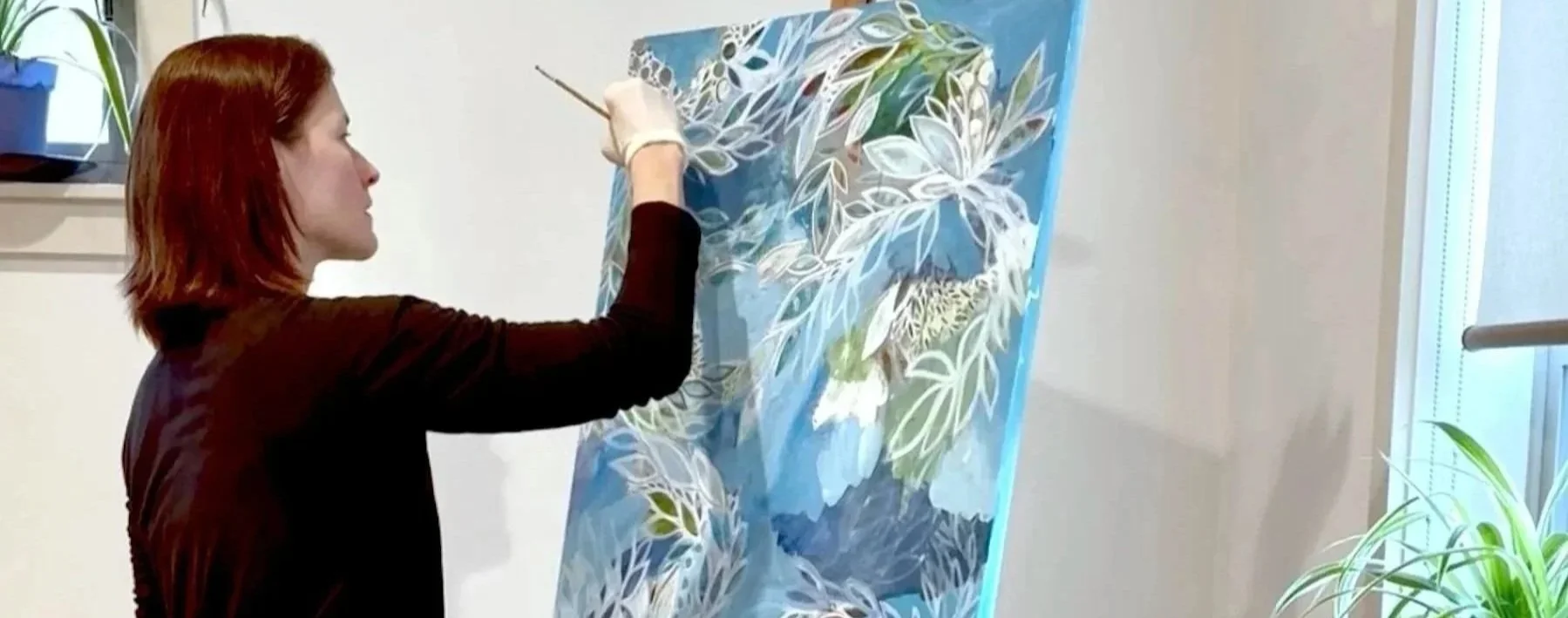
Music sourced from MusOpen and Wikimedia Commons. Course headline artwork by Kristen Phillips. Individual lessons feature work by the artists themselves.